Collision damage
Pages in this sectionReplicate the damage that can be done to spacecraft in orbit to explore the impact of high-speed collisions.
This activity was originally developed by the European Space Agency.
Kit list
- Marbles (and any other object you want to safely drop)
- Crisps (Pringles or similarly shaped crisps work well
- Deep sided tray or box
- Ruler
Introduction
If pieces of space debris collide with anything else in orbit, the effects could be catastrophic. Active spacecraft could be seriously damaged or destroyed, not only affecting our ability to use them, but simultaneously sending more pieces of space debris into the atmosphere. Explore the factors that effect how much damage is done by such a collision using marbles and crisps.
Running the activity
- Place a crisp in the tray
- Use the ruler to decide a height to drop the marble from. This demonstration works best when you start small (so close to the crisp), then increase the height as you go along.
- Drop the marble onto the crisp. Count how many fragments the crisps has broken into. Note down the height and the number of fragments.
- Repeat several times from different heights using fresh crisps, noting down the results each time.
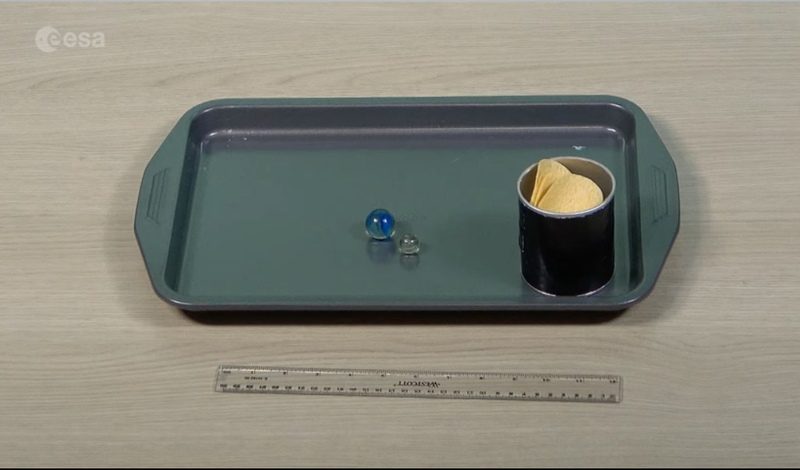
The marble picks up speed as it falls. This means that the higher the point you drop the marble from, the faster it will be going when it hits the crisp. What effect does this speed have on the collision?
Other things to try
There are a range of things that can impact how much damage is done by a collision. How do your results change if you:
- Drop objects of different masses onto the crisp.
- Drop the marbles onto several layers of crisps.
- Change the crisp for a different material.
Dropping a marble several times on the same crisp also shows that pieces of debris can be broken into smaller and smaller pieces with further collisions.
Destination Space extension
If your organisation took part in ASDC’s Destination Space project, the pressure rocket demonstrates how small items can do a lot of damage when shot at high speed.
This activity is also available in our downloadable resource pack.
Header image credit: ClearSpace UK